Ayurvedic Skincare Guide
Best Ayurvedic Face Oil for Glowing Skin: What to Look for Before You Buy
Your skin feels dull. You’ve cycled through serums. Nothing seems to last past noon. If you’ve started looking toward Ayurvedic face oils, you’re asking the right questions — but the options are overwhelming. This guide breaks down what actually makes one effective: which ingredients matter, how to use it, and how to tell a well-formulated botanical oil from marketing dressed in Sanskrit.
What Is an Ayurvedic Face Oil?
Ayurvedic face oils are not simply moisturizing products with a few herbs mixed in. At their most authentic, they follow a classical preparation method called taila paka vidhi — a slow, heat-based infusion in which botanical ingredients are cooked into a base oil until their active compounds fully transfer into the carrier.
This tradition is thousands of years old, documented in foundational texts like the Charaka Samhita and the Ashtanga Hridayam. Both texts classify herbs by their specific skin actions — varnya for luminosity, snigdha for moisture, lekhana for clarity — and prescribe their use in oil preparations for a reason: oil is considered the ideal medium for carrying these properties deep into the skin.
The philosophy behind these oils is rooted in snehana — the Ayurvedic practice of anointing and nourishing the skin with oil. Snehana is considered more than surface hydration. It’s a way to calm the nervous system, support circulation, and bring balance to the skin over time.
Modern formulations often follow this classical structure while using cold-pressed carrier oils as a base. The result is a layered, skin-nourishing product that works differently from synthetic serums — more gradually, more cumulatively, and with far fewer processed ingredients. If you’re used to seeing results in 72 hours, this is a different kind of relationship with your skin.
Key Ingredients and What They Do
The herbs in Ayurvedic face oils are chosen for their specific karma — their traditional action on the skin. Understanding a few of these actions helps you read an ingredient list with real confidence.
Ingredient 01
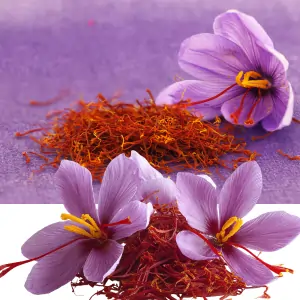
Saffron — Kumkuma
Varnya — luminosity-supportingSaffron holds one of the most prominent positions in Ayurvedic skin rituals. The Charaka Samhita classifies it as a varnya herb — traditionally considered to support the brightness and even appearance of skin. In face oils, saffron is used in small but concentrated amounts; even a modest infusion is considered significant. Your skin may feel more supple and look visibly brighter with consistent use, particularly during dry or cold months. Quality matters considerably — Kashmiri saffron is widely regarded as the most potent, with a higher concentration of crocin and safranal.

Ingredient 02
Indian Madder Root — Manjistha
Varnya + Rakta shodhakaManjistha (Rubia cordifolia) is one of Ayurveda’s most respected herbs for skin. Known in Ayurvedic practice for its varnya (brightening) and rakta shodhaka (blood-purifying) properties, it was traditionally used to support an even-toned, clear complexion. As a face oil ingredient, a manjistha-infused carrier can support a healthy-looking glow over consistent nightly use. Some women find it fits particularly well into a calming nighttime ritual.
Ingredient 03
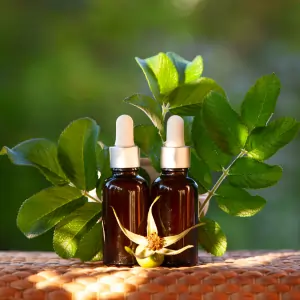
Rosehip Seed Oil
Best for Vata & mature skinRich in linoleic acid and essential fatty acids, rosehip seed oil may help skin feel softer and support the integrity of the moisture barrier over time. For Vata-dominant skin — described in Ayurveda as thin, cool, and prone to dryness and a fatigued appearance — rosehip provides a deeply nourishing base that absorbs without feeling heavy or occlusive. Its naturally occurring beta-carotene contributes a warm, subtle quality to the oil’s feel.
Ingredient 04
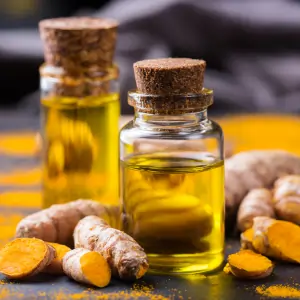
Turmeric — Haridra
Lekhana + Kanti-vardhanaHaridra is one of the most documented botanicals in Ayurvedic medicine. Its lekhana (cleansing) and kanti-vardhana (radiance-enhancing) properties have been applied in skin preparations for centuries. In face oils, turmeric is typically used in extract or carefully infused form to avoid staining. Research on curcumin — its primary active compound — is still developing in Western clinical settings. It can support a moisturized, healthy-looking appearance over time.
Ingredient 05
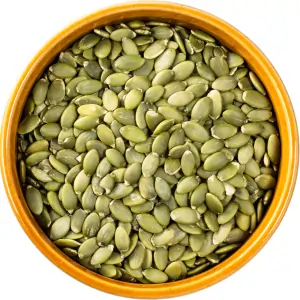
Bakuchiol — Babchi Seed
Best for mature skinDerived from the seeds of Psoralea corylifolia, bakuchiol has a long history in Ayurvedic medicine as bakuchi. In Western clinical research, it has been studied as a plant-based functional analog to retinol — with published studies suggesting it may support skin texture and the appearance of firmness with fewer reported side effects. For women looking for a naturally derived ingredient with documented research behind it, bakuchiol is worth seeking out in a formulation.
How to Use Ayurvedic Face Oil in Your Routine
The most common mistake with facial oils is using too much, too fast. Three to five drops is the practical amount for the full face and neck. Consistency over weeks matters far more than the amount applied at once.
Morning Application
Apply after any water-based serum and before SPF. Let absorb for 60–90 seconds before layering sunscreen. Lighter oils — rosehip and jojoba-based — absorb quickly and won’t interfere with makeup when applied this way. Two to three drops is typically enough in the morning.
Evening Ritual
Ayurvedic tradition favors evening oil rituals. Applying a face oil at night gives skin uninterrupted hours to absorb and respond without SPF or environmental interference. Warm three to five drops between your palms, press gently into skin, then use upward circular motions — a simplified version of the classical abhyanga technique adapted for the face.
Layering Order
Apply oil as the final step after all water-based products — oil seals in hydration. For very dry skin, some women find applying the oil between serum and moisturizer works better. Test both approaches over two weeks and observe your skin’s response before deciding.
Abhyanga Technique
The abhyanga approach for the face emphasizes gentle upward strokes along the jawline, circular motion at the temples, and light pressure along the brow bone. This is a slow, intentional practice that may fit well into a calming ritual before sleep. The technique being imperfect matters far less than the practice being consistent.
Who May Benefit from Ayurvedic Face Oil
Ayurveda describes three primary doshas — Vata, Pitta, and Kapha — each with a corresponding skin quality that responds differently to oil-based nourishment. Understanding yours can help you choose the right formulation and approach.
Vata Skin
Dry & Dull Complexions
Vata skin is thin, cool, and prone to dryness and a fatigued appearance. It responds well to rich, warming base oils — sesame, rosehip, or marula. May help skin feel softer, especially in cold or dry seasons.
Aging Skin
Mature Skin (35+)
As skin produces less natural sebum with age, a botanical face oil supplements that lost lipid layer. Bakuchiol, saffron, and rosehip are particularly relevant for women looking to support skin texture and glow naturally.
Low Radiance
Fatigued-Looking Skin
A nightly ritual centered on varnya herbs like saffron or manjistha can support a healthy-looking glow over time. Typically four to eight weeks of consistent use before visible changes appear.
Pitta Skin
Sensitive & Reactive
Pitta skin tends to be more reactive to heat and actives. Choose lighter bases — jojoba or hemp seed — introduce slowly, and always patch test before applying to the full face.
What to Look for When Choosing
Not all face oils carrying Ayurvedic branding are made with the same standards. Here’s what separates a thoughtfully formulated product from one that borrows the aesthetic of tradition without the substance.
- Cold-pressed base oils. Look for carriers labeled cold-pressed — sesame, rosehip, jojoba, or marula. Cold-pressing preserves the fatty acid profile and micronutrients. Heat-extracted oils lose a significant portion of this during processing.
- Infused vs. blended formulations. Classical Ayurvedic oils slow-cook herbs into the base oil, allowing active compounds to transfer fully. Some products simply blend herbal extracts in — a different process. Look for transparency in how the product is made.
- Herb sourcing specifics. Saffron and manjistha vary significantly by origin and harvest quality. Brands that specify provenance — Kashmiri saffron, Indian-grown manjistha — signal more intentional sourcing than generic “saffron extract.”
- Packaging integrity. Face oils should be stored in dark amber or cobalt glass to protect carrier oils from light oxidation, which degrades fatty acids over time. Clear plastic packaging is a signal worth noting.
- Always patch test. Even well-formulated natural oils can cause reactions in sensitive individuals. Test on your inner forearm or behind the ear for 24–48 hours before applying to your full face.
Common Myths Worth Addressing
Face oils clog pores
The relationship between oils and pores is more nuanced than most conversations acknowledge. Many plant-derived oils — rosehip, jojoba, squalane — are widely considered non-comedogenic for most skin types. Comedogenicity depends on the specific oil, the amount applied, and individual skin type. The research in Western clinical settings is still limited, and blanket claims in either direction are oversimplified. Three drops is a very different application than ten.
Face oils are only for dry skin
Ayurvedic tradition addresses oil use across all three doshas, not only Vata. Kapha-dominant skin, which tends toward heaviness and congestion, may do well with lighter, more astringent oils like grapeseed or jojoba. Pitta skin can sometimes benefit from cooling oil bases. The principle is not that oil suits all skin types equally — but that the right oil, in the right amount, can be supportive regardless of constitution.
More product means faster results
More oil than your skin can absorb sits on the surface, feels greasy, and transfers onto pillowcases and SPF. Consistent daily use over weeks and months matters far more than the amount applied at once. Ayurvedic skincare philosophy is, at its core, about rhythm and repetition — the same small ritual practiced daily — rather than intensity. Give it six to eight weeks before forming a real judgment.
Disclaimer
This article is for educational purposes only. Always patch test new skincare products before full application. Avoid applying oils to irritated skin, open wounds, or active rashes. This content does not constitute medical advice. Consult a licensed dermatologist for persistent or worsening skin concerns.
Frequently Asked Questions
Tap any question to read the full answer.
What makes an Ayurvedic face oil different from a regular face oil?
A true Ayurvedic face oil follows a classical formulation philosophy rooted in texts like the Charaka Samhita. The distinguishing feature is the infusion process — taila paka vidhi — in which botanicals are slow-cooked into the base oil rather than simply blended in. The herbs selected are purposeful: most Ayurvedic skin formulas center on varnya herbs like saffron, manjistha, and licorice. A conventional face oil may use similar ingredients but without the same formulation framework or herb-specific rationale. The difference is one of tradition, intent, and preparation method — not just ingredient lists.
How long does it take to see results from an Ayurvedic face oil?
Ayurvedic skincare works on a slower timeline than most synthetic actives. You may notice your skin feeling softer within the first week or two of consistent use. Changes in appearance — more luminous, more even, less fatigued — typically take four to eight weeks of daily use before they become clearly visible. This reflects how botanical ingredients interact with skin gradually and cumulatively, building a foundation rather than triggering a short-term response. Photographs taken in the same light, at the same time of day, are a useful way to track progress over that period.
Can I use a face oil if I have oily or combination skin?
Yes — with the right formulation. Jojoba oil is particularly well-regarded for oily and combination skin because its composition closely resembles the skin’s natural sebum, and it tends not to feel heavy or pore-blocking. Hemp seed oil is another option often recommended for balanced skin. Apply a smaller amount — two to three drops — and use at night only if daytime application feels like too much. Some women with oily skin find that a plant oil helps regulate surface oil production over time, though this is individual and not guaranteed.
What is kumkumadi oil, and is it the same as a general Ayurvedic face oil?
Kumkumadi oil is a specific classical formulation — not simply a marketing term. Its name comes from kumkuma, the Sanskrit word for saffron. The full formulation, as documented in classical Ayurvedic texts, includes multiple supporting botanicals: manjistha, lotus, sandalwood, licorice, and others, typically infused into a sesame oil base. A general “Ayurvedic face oil” is a broader category that may or may not follow this classical recipe. Kumkumadi is a subset — one of the most historically documented formulations for skin luminosity specifically — and the term should indicate a specific multi-herb formulation, not just a saffron-tinted oil.
Is it safe to use Ayurvedic face oil during pregnancy?
Some Ayurvedic herbs used in face oils — including saffron in larger concentrations, and certain essential oils sometimes added to Ayurvedic blends — are not recommended during pregnancy or nursing. This is particularly relevant for face oils that use concentrated herbal infusions rather than simple carrier oils. If you are pregnant or breastfeeding, always review the full ingredient list with your OB-GYN or a qualified healthcare provider before introducing any new herbal skincare product. Simple, unfragranced carrier oils like rosehip or jojoba are generally considered lower risk, but complex botanical formulas warrant closer review.
Can an Ayurvedic face oil replace my moisturizer?
It depends on your skin type and the climate where you live. In dry climates, during winter, or for Vata-dominant skin, most people do best with both — a water-based moisturizer to deliver hydration and a face oil over it to seal that moisture in. In humid conditions, or for skin that doesn’t feel tight after oil application alone, some women find the face oil sufficient as a final step. A practical test: apply the oil as your only product one evening and wait 30 minutes. If your skin feels comfortable and not tight, it may be doing enough. If it feels slightly dry, layering a light moisturizer underneath is the adjustment to try.
Read our complete Ayurvedic day-and-night face oil routine review
This is an affiliate link. We may earn a commission if you purchase through it, at no additional cost to you. Product details and availability can change, so review the seller information before buying.
Read our complete Ayurvedic day-and-night face oil routine review