How to Get Glowing Skin Naturally:
An Ayurveda-Inspired Routine
Your skin did its best today — but it still looks tired, a little flat, maybe even patchy. You’ve tried products. You’ve tried simplifying. You’re not sure what’s actually working. This guide starts where you are.
📋 This guide is for educational skincare information only and is not medical advice. Always consult a dermatologist for skin conditions.To help skin appear more glowing naturally, focus on three things: keeping the skin barrier healthy, maintaining hydration, and removing dead cell buildup gently. Ayurveda approaches this through daily rhythm (dinacharya), facial oil massage, and herbs like turmeric and rose water. Modern skin science supports gentle cleansing, moisturizing, non-irritating exfoliation, and daily SPF. There are no miracle fixes — but with a consistent, simple routine, most people start to notice softer, more radiant-looking skin within 3–6 weeks. This is a cosmetic routine, not a medical treatment.
Why Does Skin Look Dull in the First Place?
You can do a lot of things right and still end up with skin that looks flat, tired, or uneven. That’s not a failure. It usually means something in your routine — or your environment — is quietly working against you.
Here are the most common reasons skin loses its natural luminosity:
Dead Skin Cell Buildup
Your skin naturally sheds cells, but this process slows with age and stress. When dead cells pile up, they create a rough, light-scattering surface — which is why skin appears flat or ashy instead of reflective and smooth.
Dehydration
When the skin doesn’t hold enough water, it looks crepe-y, dull, and tight. This happens even in oily skin types. Dehydration is a hydration problem, not an oil problem — and they require different solutions.
A Compromised Skin Barrier
Over-exfoliating, using too many active ingredients, or cleansing too aggressively can break down the skin’s protective barrier. A damaged barrier can’t hold moisture properly and becomes reactive, inflamed, and — yes — dull-looking.
Inconsistent or Overcomplicated Routines
Using 8–10 products in random order often causes more irritation than results. Skin tends to respond best to consistent, simple, compatible routines rather than constant product-switching.
UV Damage and No Sunscreen
Daily UV exposure — even on cloudy days — breaks down collagen, triggers uneven melanin production, and is one of the leading causes of an uneven-looking skin tone over time. Skipping SPF is one of the most common reasons natural routines underperform.
Other Contributing Factors
- Chronic poor sleep
- Low water intake
- High sugar or processed-food diet
- Urban air pollution and dust
- Stress and cortisol spikes
What Does Ayurveda Say About Glowing Skin?
Ayurveda doesn’t separate beauty from health. In this system, how your skin looks is considered a reflection of your inner balance — your digestion, sleep, stress levels, and daily habits all shape your outer appearance.
The term for natural skin luminosity in Ayurveda is Prabha — a word that roughly means “radiance from within.” It isn’t the result of a single product. It’s the result of a life in rhythm.
The Dosha Connection (Simplified)
Ayurveda describes three biological energies — Vata, Pitta, and Kapha — that influence skin type and concerns:
- Vata skin tends to be dry, thin, and prone to fine lines and roughness.
- Pitta skin tends to be sensitive, warm, and prone to redness or uneven tone.
- Kapha skin tends to be thicker, oilier, and slower to show aging — but prone to congestion.
Rather than labeling yourself permanently, Ayurveda encourages observing what your skin needs right now and responding with balance, not force.
Dinacharya: The Daily Rhythm Principle
One of Ayurveda’s most practical ideas is dinacharya — a structured daily routine. It suggests that consistency matters more than intensity. Doing the same simple steps each morning and evening, in a calm and deliberate way, is considered more powerful than occasional intensive treatments.
Abhyanga: The Facial Oil Massage Tradition
Abhyanga is Ayurveda’s practice of warm oil massage — applied to both body and face. For the face, a gentle daily massage with a small amount of appropriate oil is believed to improve circulation, nourish the skin’s surface, and support a more radiant appearance.
Modern skincare does support the idea that gentle facial massage improves circulation and lymphatic drainage, which may contribute to a healthier-looking complexion. Evidence remains emerging, but the practice is low-risk for most people.
Ayurveda’s View on Dull Skin
Dull-looking skin in Ayurveda is often linked to excess Ama — a concept referring to accumulated metabolic waste or toxins that obstruct natural processes. On the skin level, this manifests as congestion, poor circulation, and a lack of surface luminosity. The solution isn’t one ingredient. It’s a return to rhythm, hydration, and gentle nourishment.
What Modern Skin Science Says
Skin science explains radiant-looking skin through a few key concepts — and they align surprisingly well with many Ayurvedic principles.
The Skin Barrier
Your outermost skin layer — the stratum corneum — acts as a protective barrier between your skin and the environment. When it’s healthy, it holds moisture in, keeps irritants out, and reflects light evenly. When it’s compromised, the result is dull, sensitized, reactive skin that no serum can truly fix until the barrier is restored.
Barrier-supportive ingredients include: ceramides, niacinamide, glycerin, squalane, and fatty acids. These are also found, in traditional forms, in several Ayurvedic botanicals.
Transepidermal Water Loss (TEWL)
TEWL refers to the invisible evaporation of water through the skin’s surface. High TEWL = dehydrated, compromised skin. Occlusive or emollient moisturizers — including facial oils — can help reduce TEWL and keep skin looking plump and hydrated.
Exfoliation and Cell Turnover
Regular, gentle exfoliation helps remove dead cell buildup that causes skin to appear dull and rough. Over-exfoliation, however, strips the barrier. The sweet spot is gentle exfoliation 1–2 times per week — not daily scrubbing.
Sunscreen: Non-Negotiable
The American Academy of Dermatology recommends daily broad-spectrum SPF 30+ sunscreen as one of the most evidence-backed ways to protect skin appearance over time. No natural routine is complete without it. UV exposure is the primary driver of visible skin aging and uneven-looking tone in most people.
A Simple Ayurveda-Inspired Routine for Glowing-Looking Skin
This is a cosmetic routine — not a prescription. Adjust it based on what your skin responds to. Patch test everything new. Introduce one product at a time.
Morning Routine
- Gentle Rinse or Mild Cleanser
In the morning, your skin doesn’t need a full cleanse. A splash of lukewarm water or a very gentle cleanser removes overnight products without stripping natural oils.
- Hydrating Toner or Rose Water Mist
Rose water (gulab jal) is a traditional Ayurvedic toner. It helps balance skin pH gently and adds a light layer of moisture. Apply to slightly damp skin.
- Moisturizer
Choose a lightweight, non-comedogenic moisturizer suited to your skin type. Look for hydrating ingredients like hyaluronic acid, glycerin, or ceramides. Apply to damp skin for better absorption.
- Facial Oil (Optional, 1–2 drops)
A light face oil applied over moisturizer can help seal in hydration and support a more nourished appearance. Use only 1–2 drops. A good option for most skin types: rosehip, squalane, or a traditional kumkumadi-style blend (patch test first).
- Broad-Spectrum SPF 30+ Sunscreen
Apply every single morning — even indoors, even on cloudy days. This is the most evidence-backed step for protecting your skin’s long-term appearance.
Evening Routine
- Double Cleanse or Gentle Cleanser
If you wear SPF or makeup, start with a cleansing oil or micellar water, then follow with a gentle foaming or cream cleanser. This removes buildup without over-stripping.
- Hydrating Toner or Essence
Add moisture back to freshly cleansed skin. Rose water or an aloe-based toner work well here and align with the Ayurvedic principle of replenishing after cleansing.
- Serum (Optional — if using one)
If you use a Vitamin C or niacinamide serum, evening application avoids UV interaction issues. Introduce serums slowly. Don’t combine multiple actives without understanding compatibility.
- Moisturizer
A slightly richer moisturizer at night supports overnight skin repair. Ingredients like shea, ceramides, or squalane are gentle and effective for most skin types.
- Facial Oil + Gentle Massage (Abhyanga-Inspired)
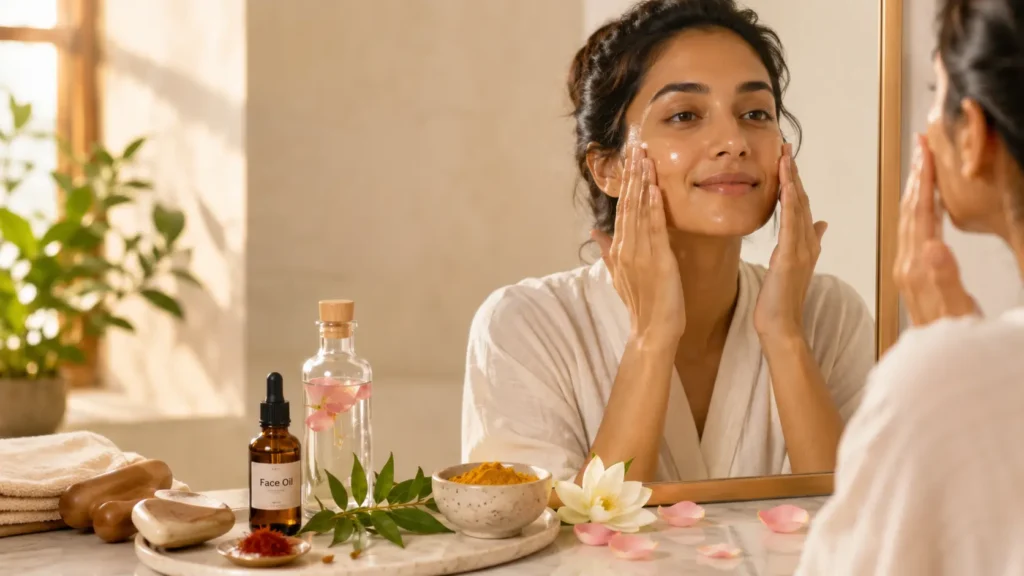
Warm 2–3 drops of a skin-appropriate oil between your palms and press gently onto your face. Use light upward strokes for 60–90 seconds. This supports circulation and a relaxed nervous system — both linked to skin appearance.
Weekly Add-On (1–2x per week)
- Gentle exfoliation: A soft enzyme exfoliant or very fine physical scrub to remove dead cell buildup. Never scrub inflamed or sensitized skin.
- Nourishing face mask: A hydrating mask (aloe, honey, oat-based) can support a softer, more supple skin appearance.
Ayurveda-Inspired Ingredients That May Support Glowing-Looking Skin
These are traditional ingredients with varying levels of modern research. For each, we share what Ayurveda says and what skin science currently understands.
Ayurveda: One of the most celebrated herbs for skin luminosity. Used in traditional face packs for centuries.
Science: Curcumin has antioxidant and anti-inflammatory properties. Some emerging research shows potential for supporting an even skin tone. Stains skin yellow; evidence is still developing. Patch test always.
More research is needed for topical use.
Ayurveda: Used as a toner, skin soother, and Pitta-balancing ingredient.
Science: Rose water has mild astringent and anti-inflammatory properties. It’s a gentle, pH-friendly toner option. Well-tolerated by most skin types including sensitive. Widely used; evidence for significant glow is limited but irritation risk is low.
Ayurveda: Known as Kumari. Used for cooling, soothing, and hydrating the skin.
Science: Well-studied for its hydrating and wound-supportive properties. Contains polysaccharides that help skin retain moisture. Suitable for most skin types. Pure aloe gel is generally low-risk.
Ayurveda: A prized ingredient for skin radiance, used in kumkumadi oil blends.
Science: Some preliminary research suggests crocin (in saffron) may have antioxidant effects relevant to skin tone. Evidence is limited and mostly preliminary. Highly concentrated products need patch testing.
Ayurveda: Traditionally used to support a more even-looking skin tone. One of Ayurveda’s key herbs for skin.
Science: Contains compounds studied for antioxidant and anti-inflammatory effects. Evidence for topical use remains emerging.
Evidence is limited, but this ingredient is traditionally used in Ayurveda.
Ayurveda: Widely used for balancing oily, acne-prone skin. Known for its purifying properties.
Science: Neem contains nimbidin and other compounds studied for antibacterial properties. Neem oil is concentrated and can irritate — dilution is essential. Not recommended for sensitive or dry skin without guidance.
Ayurveda: Not a classical Ayurvedic ingredient, but aligns with its principle of nourishing seed oils.
Science: Rich in linoleic acid and beta-carotene. Associated with supporting an even-looking skin tone and softer skin texture. Non-comedogenic for most people. Some evidence for supporting skin appearance post-sun damage.
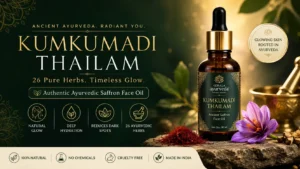
Ayurveda: A classical Ayurvedic formulation combining saffron, sesame base, and multiple botanicals. Used for centuries for radiant-looking skin.
Science: Individual ingredients have varying support. No large-scale clinical trials on the full blend. Traditionally used; individual results vary. Always patch test due to multi-ingredient composition.
7 Common Mistakes That Keep Skin Looking Dull
1. Over-Cleansing
Washing your face 3+ times a day strips natural oils and compromises the skin barrier. Twice daily — or once in the morning — is enough for most skin types.
2. Over-Exfoliating
More exfoliation doesn’t mean more glow. Scrubbing too often (especially with rough physical scrubs) causes micro-tears, inflammation, and a stripped barrier that looks worse, not better. Limit to 1–2 times per week with a gentle product.
3. Skipping Moisturizer Because Skin Feels Oily
Oily skin can still be dehydrated. Skipping moisturizer often causes the skin to overproduce oil to compensate. A lightweight, non-comedogenic moisturizer works for oily skin types too.
4. Applying Too Many Actives at Once
Vitamin C + AHA + retinol + niacinamide + acids in the same routine often leads to irritation, redness, and a wrecked barrier. Less is more. Introduce one new active at a time. Give it 4–6 weeks before judging.
5. Skipping Sunscreen
A glow that fades by 10am because you skipped SPF is a routine that’s missing its most important step. Sunscreen protects everything your routine builds.
6. Constantly Switching Products
Skin takes time — usually 4–8 weeks — to respond to a new routine. Switching every two weeks prevents you from ever knowing what’s working. Build a simple routine, then give it time.
7. Applying Facial Oil Incorrectly
Using too much oil (more than 3–4 drops) or applying it over dry skin rather than damp skin reduces effectiveness and can feel greasy. Press oil in gently rather than rubbing vigorously.
Myths vs. Facts: Natural Skincare and Glowing Skin
- Myth
Natural ingredients are always safe because they come from plants.
FactMany natural ingredients — including essential oils, citrus, and even turmeric — can cause irritation, allergies, or photosensitivity. “Natural” does not mean “risk-free.” Patch testing is always important.
- Myth
You need expensive products to get glowing skin.
FactPrice does not determine effectiveness. A simple, consistent routine with gentle, affordable products — cleanser, moisturizer, SPF — outperforms an expensive but complicated routine that irritates the skin.
- Myth
More steps and more products mean better results.
FactA streamlined routine is often more effective. Layering too many products can cause product interaction issues, barrier damage, and inflammation — all of which make skin look worse, not better.
- Myth
Face oils clog pores and cause breakouts for everyone.
FactWhether a face oil clogs pores depends on the specific oil and your skin type. Many oils — like squalane, rosehip, and jojoba — are considered non-comedogenic for most people. Some oils can be problematic for acne-prone skin. It’s individual, not universal.
- Myth
An Ayurveda routine can permanently remove dark spots or uneven skin tone.
FactAyurveda-inspired routines may help skin appear clearer and more even over time with consistency. However, persistent dark spots or melasma often require consultation with a dermatologist. This is a cosmetic routine, not a medical treatment.
- Myth
Glowing skin is a permanent state once achieved.
FactSkin appearance changes daily based on sleep, diet, hydration, stress, and hormones. A consistent routine creates a better baseline — but skin will naturally fluctuate. That’s normal, not a failure.
Is This Routine Right for You?
- Normal, dry, or combination skin
- Those new to natural or Ayurvedic skincare
- Sensitive skin that reacts to actives
- Anyone wanting to simplify their routine
- Those looking for a gentle daily glow routine
- Beginners or those starting fresh
- Active acne or acne-prone skin (consult a derm first)
- Eczema or psoriasis flares
- Known allergies to botanicals
- Rosacea or highly reactive skin
- Oily, breakout-prone skin (oils need extra care)
When to See a Dermatologist
Please consult a board-certified dermatologist if you have: persistent dark spots or melasma, active inflammatory acne, eczema or psoriasis, sudden skin changes, reactions to multiple products, or any skin issue that concerns you medically. Natural routines are not substitutes for professional skin care.
Frequently Asked Questions
Can I get glowing skin naturally without expensive products?
Yes. Consistency with a simple, gentle routine — cleansing, moisturizing, an optional face oil, and daily sunscreen — can help your skin appear more radiant over time. Expensive products are not required.
How long does it take to see results with a natural skin routine?
Most people begin to notice softer, more hydrated-looking skin within 2–4 weeks of a consistent routine. More visible changes in skin tone or texture may take 6–12 weeks. Results vary by individual. This is a cosmetic routine, not a medical treatment.
What does Ayurveda say about glowing skin?
Ayurveda calls radiant skin Prabha — a natural luminosity linked to balanced doshas, proper digestion, hydration, gentle oil massage (abhyanga), and consistent daily rhythm (dinacharya). It views dull-looking skin as a sign of imbalance, not a permanent condition.
Is face oil good or bad for glowing skin?
Face oils can support the look of glowing skin by sealing in moisture and nourishing the skin’s surface. The key is choosing an oil suited to your skin type and applying it correctly — usually over a moisturizer or on slightly damp skin. Always patch test first.
What causes dull-looking skin?
The most common causes include dehydration, dead cell buildup, a compromised skin barrier, lack of sleep, UV damage, over-exfoliating, over-cleansing, and inconsistent skincare. Addressing even a couple of these can make a meaningful difference.
Is turmeric safe to use on the face?
Turmeric is traditionally used in Ayurveda for skin care. However, it can stain skin and fabric yellow, and may irritate sensitive skin types. Always patch test before applying to your face. Evidence for topical turmeric is promising but still emerging; more research is needed.
Can natural skincare replace a dermatologist?
No. Natural skincare routines are cosmetic tools, not medical treatments. If you have persistent acne, rosacea, eczema, melasma, or other skin conditions, please consult a board-certified dermatologist for appropriate care.
Is it safe to apply oils to oily or acne-prone skin?
Some people with oily skin find lightweight oils like rosehip or squalane beneficial. However, if your skin is acne-prone, consult a dermatologist before adding a face oil to your routine. Not all oils suit all skin types, and individual responses vary.
Final Thoughts
Glowing-looking skin isn’t about finding one magical ingredient. It’s about consistency, gentleness, and giving your skin what it actually needs — not what it’s being sold.
Ayurveda has been saying this for thousands of years: daily rhythm, nourishing oils, gentle herbs, and inner balance create outer radiance. Modern skin science adds to that: protect the barrier, maintain hydration, exfoliate gently, and wear SPF every day.
These two frameworks agree on more than they disagree on. Start simple. Be consistent. Patch test anything new. And give your skin the time it needs — results are gradual, not instant.
This is a cosmetic routine, not a medical treatment. If you have persistent skin concerns, please see a dermatologist.
Sources & Research Notes
The following reputable sources informed this article. All Ayurvedic information is traditional and informational. Not all ingredients mentioned have strong clinical evidence; limitations are noted in context.
- American Academy of Dermatology (AAD) — Sunscreen guidelines, skin barrier, exfoliation recommendations
- National Center for Complementary and Integrative Health (NCCIH) — Ayurveda overview
- National Institutes of Health / PubMed — Curcumin antioxidant research (emerging evidence); aloe vera skin hydration studies
- Cleveland Clinic — Skin care basics, TEWL, moisturizer guidance
- Mayo Clinic — General skin health and dermatology guidance
- Charaka Samhita & Ashtanga Hridayam — Classical Ayurveda references for dinacharya, abhyanga, doshas, and skin care herbs (traditional knowledge)
- FDA — Cosmetic labeling standards (cosmetic vs. drug distinction)
- Note: Evidence for many Ayurvedic ingredients in topical skincare is traditional or emerging. Where scientific evidence is limited, this article states so explicitly.